
La souvla grecque et la rôtisserie américaine désignent des méthodes de grillade spécifiques qui diffèrent par les ingrédients et le matériel de cuisson, mais qui ont toutes deux une longue histoire. Cet article vous montrera les différences et vous fournira une introduction de base à ces deux techniques de grillade.
Qu'est-ce que le Souvla grec ?
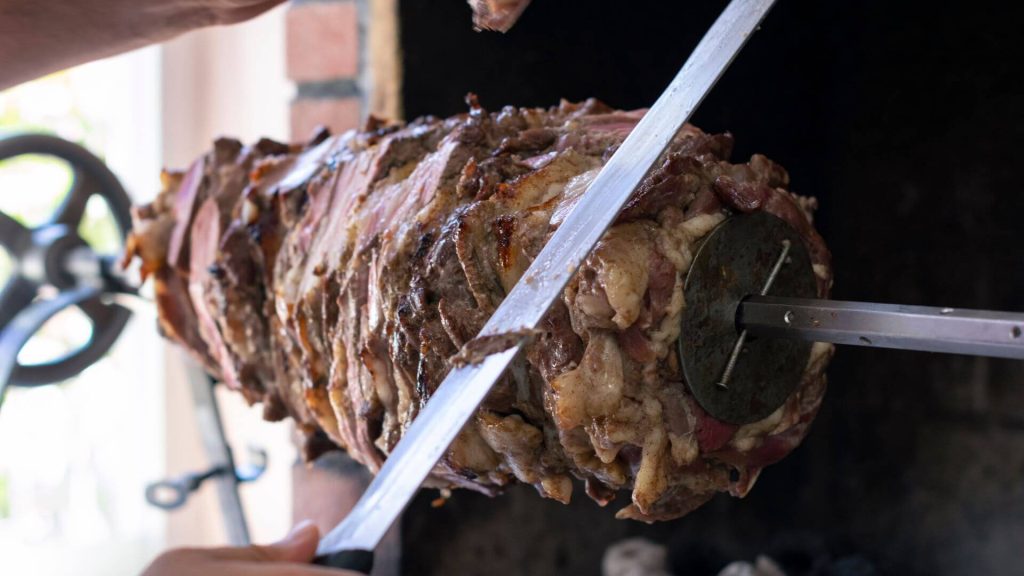
La Souvla grecque appartient à la catégorie des rôtissoires à la grecque. En termes simples, il s'agit de faire rôtir un animal entier ou de grosses pièces de viande sur une longue broche au charbon de bois, en tournant lentement pendant une période prolongée.
Combinaison : Grand crachat + Feu de charbon de bois + Rotation lente + Agneau entier / Porc entier
Il est facile de confondre Souvlaki et Souvla ; Souvlaki fait référence à de petites brochettes de viande, tandis que Souvla est rôti à l'aide d'une broche rotative.
Principales caractéristiques de la Souvla grecque :
1. Broche rotative extra-large
Le diamètre de la flèche est généralement de 12-20 mm ou encore plus épais
La longueur peut atteindre 1.2-1.8 m
Utilisé pour soutenir un agneau entier/un porc entier
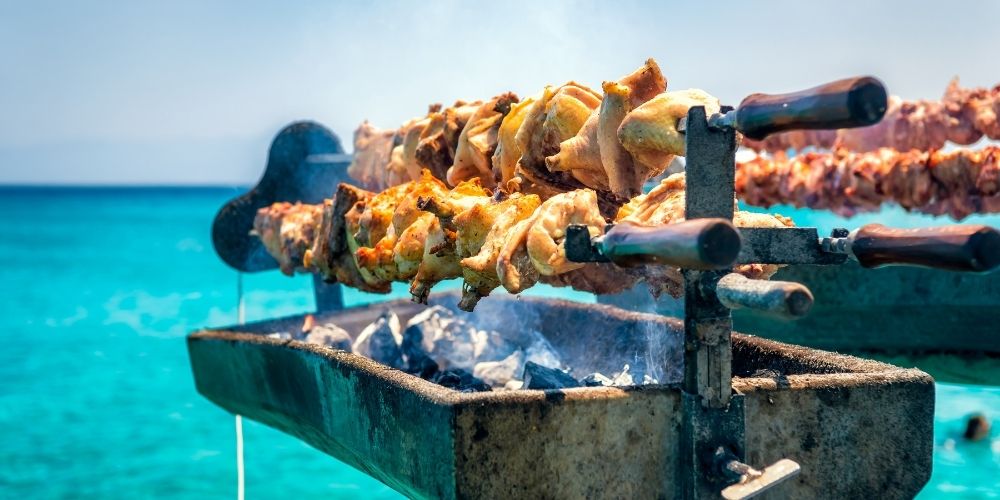
2. Essentiellement charbon de bois + flamme nue
Utilise traditionnellement le charbon de bois et le bois fruitier
La source de chaleur est répartie en dessous ou sur les côtés
Accentue la saveur fumée naturelle
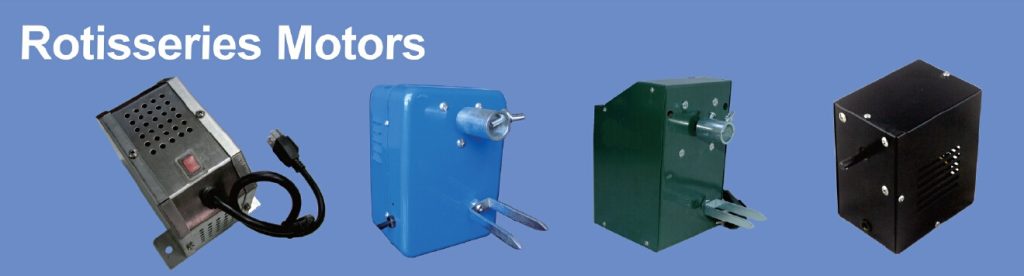
3. Rotation lente et stable de la moteur de torréfaction
Vitesse de rotation pour les animaux entiers ou les grosses pièces de viande : 2-5 tours/minute
Vitesse de rotation pour les brochettes de viande : 10-15 TOURS/MINUTE
4. Scénarios d'application
Pâques grecques, mariages, célébrations, affichées à l'extérieur des restaurants.
Qu'est-ce que la rôtisserie américaine ?
La rôtisserie américaine est une méthode de cuisson au barbecue utilisant une broche rotative horizontale, généralement utilisée pour les barbecues en plein air. Le moteur est fixé à côté du gril, ce qui est une configuration classique pour la cuisson à la rôtissoire américaine. Elle se présente généralement sous deux formes :
1. Version simple : Support métallique + broche métallique + moteur
Il s'agit du type le plus courant, facile à installer. Les moteurs de rôtisserie légers peuvent supporter des poids allant jusqu'à 10 kg et conviennent pour les petits morceaux de viande, le poulet, etc. Les moteurs de rôtisserie robustes dotés d'un matériel de haute qualité peuvent rôtir des animaux entiers, tels que des porcs ou des agneaux entiers.
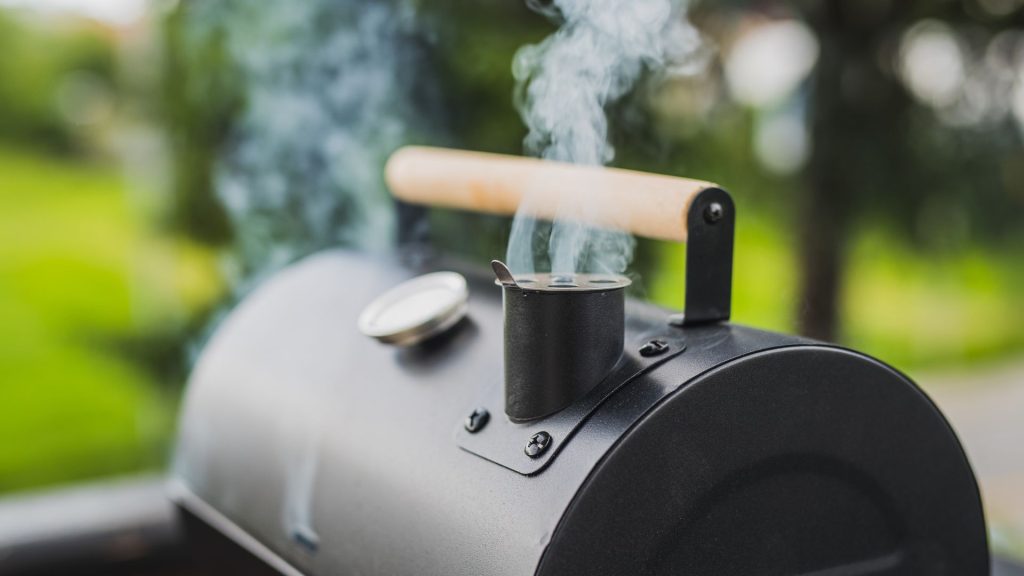
2. Fumoir: Un fumoir contient une ou plusieurs broches métalliques, entraînées par un moteur externe, permettant de cuire les aliments tout en les fumant. Cette méthode permet généralement de cuire de grandes quantités d'aliments, ce qui convient aux fêtes et aux restaurants.
Caractéristiques principales de l'American Rotisserie :
1. Rotation horizontale
La broche de la rôtissoire est installée horizontalement.
Le moteur est fixé sur le côté du four.
2. Rôtissage lent à faible vitesse
Vitesse de rotation typique : 2-4 RPM
Les différences entre la Souvla grecque et la rôtisserie américaine.
| Élément de comparaison | Souvla grecque | Rôtisserie américaine |
|---|---|---|
| Origine | Grèce, Chypre, région méditerranéenne | États-Unis |
| Scénario d'utilisation principal | Festivals, restaurants, commerces et grands événements | BBQ dans l'arrière-cour, utilisation domestique, petites installations commerciales |
| Aliments typiques | Agneau entier, porc entier, chèvre | Poulet entier, dinde, rôti de bœuf, rôti de porc |
| Taille des aliments | Très grande taille (animaux entiers) | Moyen (volaille entière ou gros morceaux) |
| Type de rôtisserie | Broche longue horizontale à usage intensif | Crache standard horizontal |
| Source de chaleur | Charbon de bois / feu ouvert | Gril à gaz (le plus courant) ou charbon de bois |
| Temps de cuisson | Longue (4-12 heures) | Modéré (1-3 heures) |
| Vitesse de rotation typique | 2-5 RPM (jusqu'à 6-10 RPM dans certains cas) | 2-6 RPM |
| Couple requis pour le moteur | Très élevé (usage intensif) | Moyen |
| Capacité de charge typique | 40-120 kg ou plus | 4,5-18 kg (10-40 lb) |
| Système d'entraînement | Entraînement par chaîne ou réduction par engrenage | Entraînement direct ou simple réduction |
| Durée de fonctionnement du moteur | Fonctionnement continu à long terme | Intermittent ou de durée moyenne |
| Positionnement sur le marché | Qualité professionnelle / commerciale | Accueil / Grade d'arrière-cour |
Conclusion
La cuisson à la rôtissoire grecque implique généralement une rotation lente et continue sur un feu de charbon de bois ou de bois, afin de cuire lentement et uniformément des animaux entiers ou de grosses pièces de viande, généralement à des températures plus basses et pendant des périodes plus longues. En revanche, la cuisson à la rôtissoire américaine se fait généralement sur un gril ou un fumoir, avec une vitesse de rotation modérée, visant à cuire une variété d'aliments à des températures plus élevées ou réglables, en équilibrant le brunissement, la rétention d'humidité et la polyvalence de la cuisson.
En fin de compte, ce qui compte le plus, c'est de choisir la méthode qui vous convient le mieux pour créer des plats délicieux.